// Media & Mentions

Out in the wild.
Stages, screens, and print.

Conference sessions, webinars, and industry reports where I have shared how marketing teams actually put AI to work. Watch the talks, read the quotes, and steal what is useful.

// Watch

Recent sessions

Webinar / August 2026 / Virtual

How To Prove Local SEO ROI With Call Tracking and Attribution

Moz, Beyond the Map Pack series

Local search metrics are lying to you. This webinar in Moz's Beyond the Map Pack series covers how to attribute phone calls back to specific keywords and listings, turn call data into a budget optimization loop, and add call tracking without breaking NAP consistency. Built for call-driven industries like home services, legal, and healthcare.
Webinar / June 2026 / Virtual

The 4-Layer AI Ops Playbook: From Better AI Outputs To Strong SEO Results

Search Engine Journal

An hour-long webinar hosted by Search Engine Journal on why more AI content does not move rankings on its own. The culprits are operational: fragmented knowledge, inconsistent quality, and scattered application. The session walks through the Knowledge, Workflow, Governance, and Application layers and a 90-day plan to prove ROI before scaling AI across a team.

Conference talk / June 2026 / Boston, MA

The 4-Layer AI Ops Playbook for SEO

SMX Advanced 2026

A 30-minute session on why operational maturity, not more AI tools, wins the next decade of search. Most SEO teams use AI for one thing: content, faster. This talk lays out the four layers that turn scattered AI use into a system a team can actually run, and the numbers behind the gap: roughly 85 percent of SEO teams use AI for content, and about 12 percent have a documented system for it.

// On the record

What I said when they asked

Quoted in State of Search 2027: What to Stop, Measure & Fund Search Engine Journal, September 2026
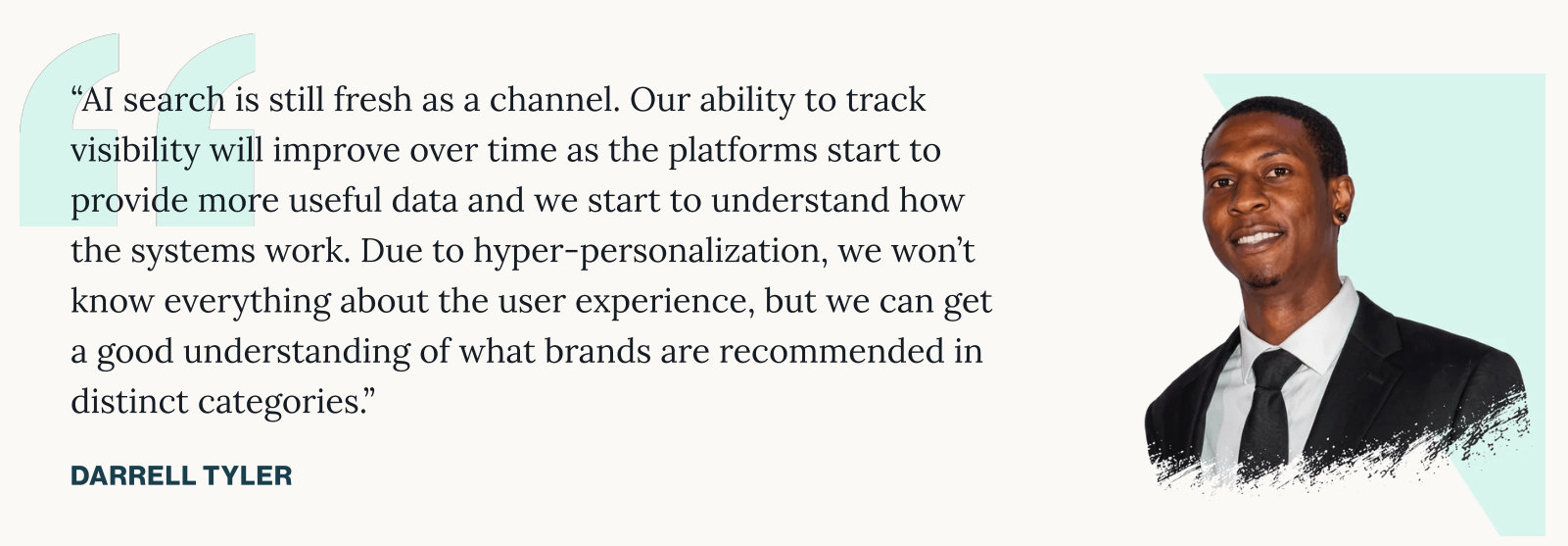
Clipping from State of Search 2027: What to Stop, Measure & Fund: AI search is still fresh as a channel. Our ability to track visibility will improve over time as the platforms start to provide more useful data and we start to understand how the systems work. Due to hyper-personalization, we won't know everything about the user experience, but we can get a good understanding of what brands are recommended in distinct categories.
On measuring AI visibility, p. 18
AI search is still fresh as a channel. Our ability to track visibility will improve over time as the platforms start to provide more useful data and we start to understand how the systems work. Due to hyper-personalization, we won't know everything about the user experience, but we can get a good understanding of what brands are recommended in distinct categories.
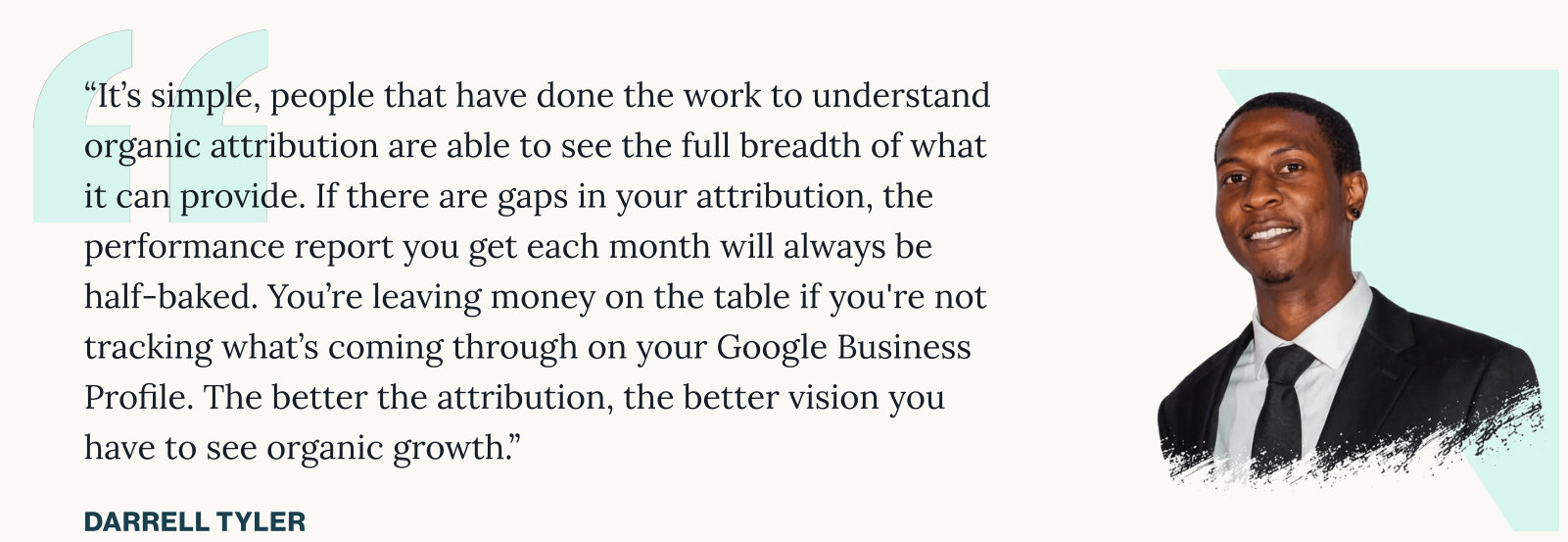
Clipping from State of Search 2027: What to Stop, Measure & Fund: It's simple, people that have done the work to understand organic attribution are able to see the full breadth of what it can provide. If there are gaps in your attribution, the performance report you get each month will always be half-baked. You're leaving money on the table if you're not tracking what's coming through on your Google Business Profile. The better the attribution, the better vision you have to see organic growth.
On attribution confidence, p. 20
It's simple, people that have done the work to understand organic attribution are able to see the full breadth of what it can provide. If there are gaps in your attribution, the performance report you get each month will always be half-baked. You're leaving money on the table if you're not tracking what's coming through on your Google Business Profile. The better the attribution, the better vision you have to see organic growth.
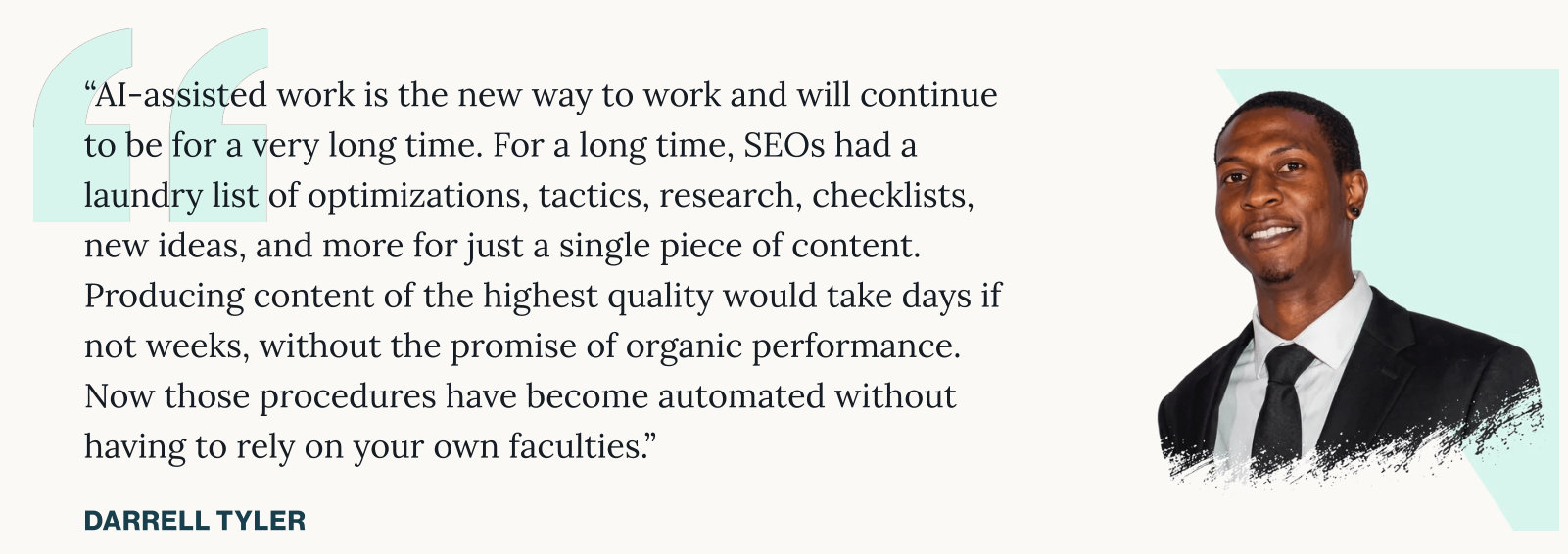
Clipping from State of Search 2027: What to Stop, Measure & Fund: AI-assisted work is the new way to work and will continue to be for a very long time. For a long time, SEOs had a laundry list of optimizations, tactics, research, checklists, new ideas, and more for just a single piece of content. Producing content of the highest quality would take days if not weeks, without the promise of organic performance. Now those procedures have become automated without having to rely on your own faculties.
On AI in SEO workflows, p. 22
AI-assisted work is the new way to work and will continue to be for a very long time. For a long time, SEOs had a laundry list of optimizations, tactics, research, checklists, new ideas, and more for just a single piece of content. Producing content of the highest quality would take days if not weeks, without the promise of organic performance. Now those procedures have become automated without having to rely on your own faculties.
Article The 4-Layer AI Ops Playbook: Webinar Recap Search Engine Journal, June 2026

You can't prompt your way out of an undocumented context.

On why the knowledge layer comes first

If your AI use is identical to your competitor's AI use, you don't actually have a strategy or an advantage, you just have a subscription.

On AI as a commodity

// The full list

Every appearance, newest first

  • September 2026
    Quoted in Search Engine Journal

    State of Search 2027: What to Stop, Measure & Fund

    Search Engine Journal's annual industry report, written by editor in chief Katie Morton, surveyed 166 search professionals on AI visibility, attribution, and where 2027 budgets are headed. I contributed expert commentary on three questions: how AI visibility measurement will mature, why attribution gaps quietly cost organic teams their budget, and what AI-assisted work has changed about producing content.

  • August 2026
    Webinar Moz, Beyond the Map Pack series / Virtual

    How To Prove Local SEO ROI With Call Tracking and Attribution

    Local search metrics are lying to you. This webinar in Moz's Beyond the Map Pack series covers how to attribute phone calls back to specific keywords and listings, turn call data into a budget optimization loop, and add call tracking without breaking NAP consistency. Built for call-driven industries like home services, legal, and healthcare.
  • June 2026
    Article Search Engine Journal

    The 4-Layer AI Ops Playbook: Webinar Recap

    Heather Campbell's written recap of the SEJ webinar: why the knowledge layer matters most, the case for staying model-agnostic by keeping style guides and prompt libraries in version control, and the idea of invisible quality atrophy in AI-assisted content.

  • June 2026
    Webinar Search Engine Journal / Virtual

    The 4-Layer AI Ops Playbook: From Better AI Outputs To Strong SEO Results

    An hour-long webinar hosted by Search Engine Journal on why more AI content does not move rankings on its own. The culprits are operational: fragmented knowledge, inconsistent quality, and scattered application. The session walks through the Knowledge, Workflow, Governance, and Application layers and a 90-day plan to prove ROI before scaling AI across a team.

  • June 2026
    Conference talk SMX Advanced 2026 / Boston, MA

    The 4-Layer AI Ops Playbook for SEO

    A 30-minute session on why operational maturity, not more AI tools, wins the next decade of search. Most SEO teams use AI for one thing: content, faster. This talk lays out the four layers that turn scattered AI use into a system a team can actually run, and the numbers behind the gap: roughly 85 percent of SEO teams use AI for content, and about 12 percent have a documented system for it.

  • May 2017
    Podcast Business RadioX / Atlanta, GA

    High Velocity Radio on Business RadioX

    An early-career radio conversation with host Lee Kantor on marketing and digital strategy for growing businesses. The first time I talked shop on air.

// Next

Need a speaker, a guest, or a quote?

I talk about AI Ops for marketing teams, SEO that shows up in revenue, and the psychology under all of it. Bio, headshot, and talk abstracts are in the media kit.